
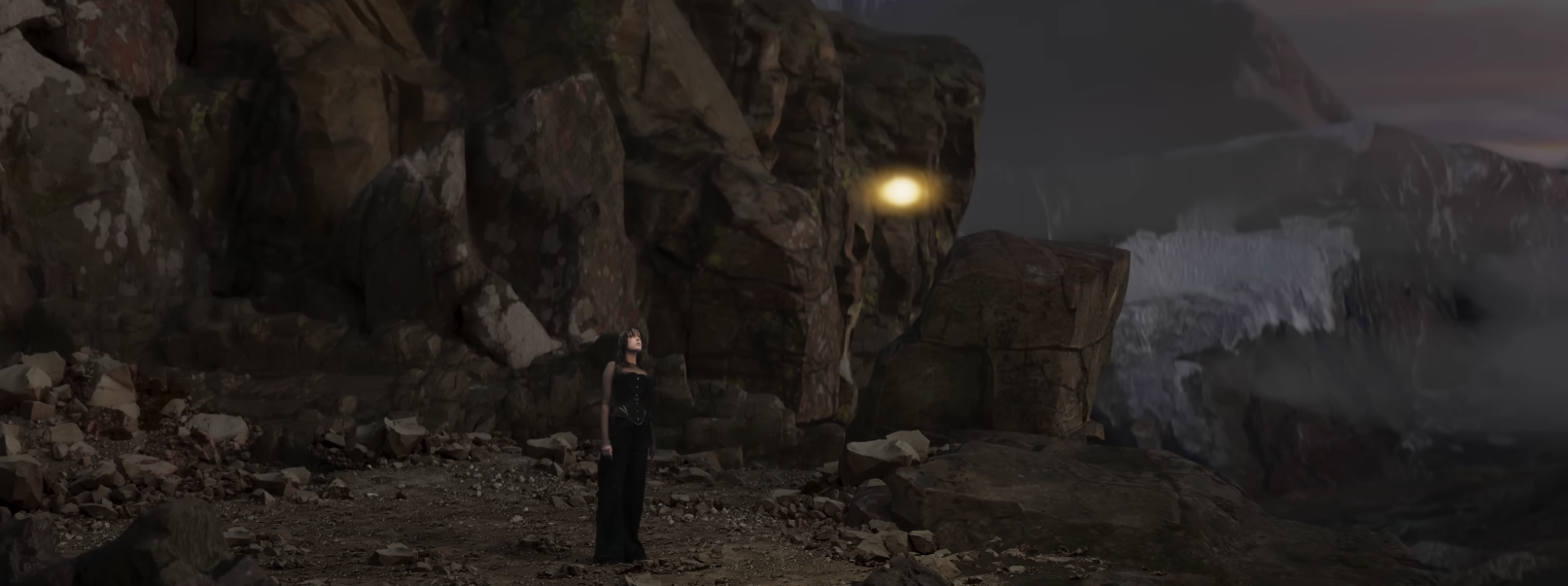
Serbia is going second in the running order in Semifinal 1, which is usually seen as the death slot – extremely hard to qualify from.
Now, I’m a fan of Serbia, so I’d usually go into a long blog post here explaining why Serbia was going to beat the odds. Except this year, I don’t think they will, since Serbia chose a song for Serbia, not a song for Europe.
Let me stress – that’s not a bad thing! Countries should be able to choose who and what they want to send to Eurovision. if all countries sent what they thought Europe would like, we’d end up with thirty soundalike songs. But Ramonda is a culturally specific ballad that Serbia is not translating well. Just watch this video below.
This video has a lot of CGI and green screen and Teya Dora in what looks to be an incredibly cinched corset. (Let me just say that if I were stranded in a barren wasteland, the corset would be the first thing to go, especially because I could probably spear game with its sharp boning.) It is a very literal interpretation of some of the lyrics, with a light that’s maybe supposed to represent Danica the Morning Star whizzing around, but the whole thing feels like a depressing video game. It’s not until the last 10 seconds of the video that we get a glimpse of a lilac ramonda, the national flower of Serbia.
Now, lyrics are always open to multiple interpretations – especially in Serbia, where this year’s contest was especially political. But the ramonda is used as a symbol of the sacrifices made by Serbia in the First World War. Since 2012, on Armistice Day, a green ribbon with a stylized ramonda pin is worn in Serbia.
I don’t want to suggest that context needs to be blatant – sometimes, things that are understood within a nation don’t translate well internationally. And leaning into the ramonda as a nationalist symbol for Serbia is one way to potentially anger some of the countries that might otherwise vote for this song. B
But if Teya Dora explains this as a song of peace, a song to honor all those who died in one of the bloodiest conflicts Europe has seen, well, that’s a narrative that Europe (and the EBU) can get behind. And if she then notes that the ramonda is a symbol of beauty that grows in the harshest conditions, reminding us that no matter how bad things seem, we should still have hope? That, my friends, is the recipe for a win, and one that doesn’t rely on nationalism or politicisation to get the point across.
As it is? We’ve got a song that is performed well by Teya Dora, but stands out for one reason alone – the repetition of the term “Lila Ramonda.” And if the audience is left wondering what the heck that is, we’re not paying attention to the song. And if we’re not paying attention to the song, we’re not voting for the song.
 dudepoints.fun